
Should I Build an Online Store or a Marketplace? The Complete Guide for Ecommerce Entrepreneurs
20 March 2026
10 min read
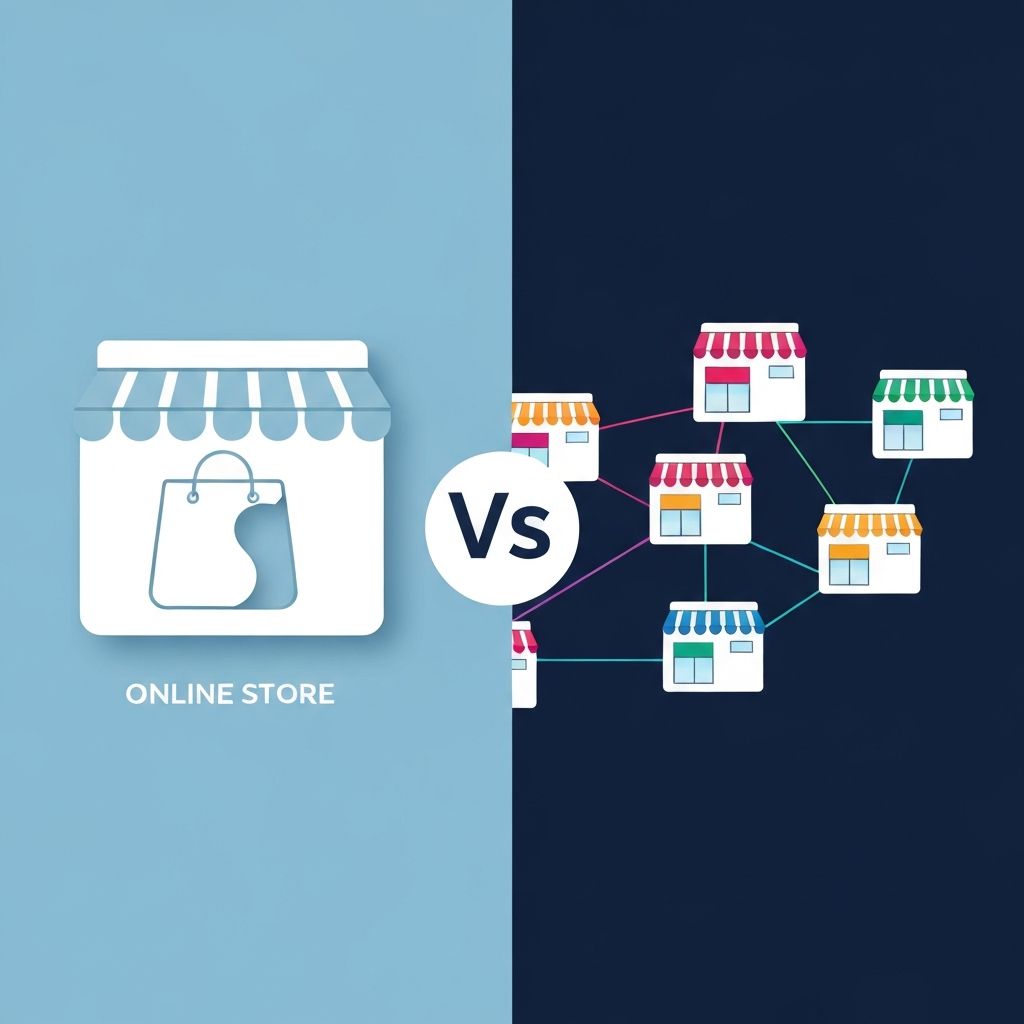
If you're considering starting an ecommerce business in 2026, you've likely asked yourself: should I build a traditional online store or launch a marketplace? It's a question that can define the trajectory of your business for years to come.
With the ecommerce industry more competitive than ever, understanding the fundamental differences between these two business models is crucial. In this comprehensive guide, we'll explore the advantages and disadvantages of each approach, examine why the traditional online store model is becoming increasingly difficult, and explain why marketplaces are emerging as the smarter path for modern entrepreneurs.
Understanding the Two Business Models
Before diving into the pros and cons, let's clearly define what we mean by each model.
What is an Online Store?
An online store (sometimes called a single-vendor store or direct-to-consumer store) is a website where one business sells its own products directly to customers. Think of brands like Gymshark, Allbirds, or your local boutique's website. The business owns or sources all inventory, handles fulfilment, manages customer service, and keeps all the revenue (minus costs).
Platforms like Shopify, WooCommerce, and BigCommerce have made it relatively easy to set up an online store. You can have a professional-looking storefront running within days.
What is a Marketplace?
A marketplace is a platform where multiple vendors sell their products to customers through a single website. The marketplace owner doesn't necessarily hold inventory — instead, they facilitate transactions between buyers and sellers, taking a commission on each sale.
Think of giants like Amazon, Etsy, or eBay. But marketplaces aren't just for tech giants. With platforms like YouPurr, entrepreneurs can launch their own niche marketplaces without writing code, connecting multiple vendors and offering customers a curated shopping experience.
The Ecommerce Landscape in 2026: Why This Decision Matters More Than Ever
The ecommerce market has fundamentally changed over the past decade. Understanding these shifts is essential to making the right choice for your business.
Market Saturation is Real
The barrier to entry for ecommerce has never been lower. Anyone can set up a Shopify store in an afternoon. While this democratisation of commerce has created opportunities, it has also created intense competition:
- There are now over 26 million ecommerce websites globally
- Customer acquisition costs have increased by over 60% in the past five years
- The average cost-per-click for ecommerce advertising has tripled since 2020
- Social media algorithms increasingly favour paid content over organic reach
For traditional online stores, this means spending more to acquire each customer while competing against thousands of similar businesses for the same audience.
Consumer Behaviour Has Shifted
Modern consumers have developed new shopping habits:
- They prefer choice and comparison — 87% of shoppers research products across multiple sites before purchasing
- They trust platforms with multiple sellers and reviews more than single-brand websites
- They expect fast, free shipping (often subsidised by marketplace economics)
- They value curation and discovery over endless scrolling through generic stores
These behavioural shifts favour the marketplace model, where customers can compare products, read reviews from multiple sources, and trust the platform's vetting process.
The Rise of Niche Marketplaces
While Amazon dominates general retail, there's been an explosion of successful niche marketplaces:
- Reverb for musical instruments
- StockX for sneakers and streetwear
- Chairish for vintage furniture
- Faire for wholesale goods
These platforms succeed by offering deep expertise in their category, curated selections, and community trust that general retailers can't match.
Online Store: Advantages and Disadvantages
Let's examine the traditional online store model in detail.
Advantages of Building an Online Store
Complete Brand Control
With your own store, you control every aspect of the customer experience. Your branding, your messaging, your packaging — it's all yours. This is valuable if you're building a lifestyle brand or have a unique story to tell.
Higher Margins Per Sale
When you sell directly, you keep all the revenue minus your costs. There's no marketplace commission eating into your profits. If your product has strong margins and you can acquire customers efficiently, this model can be very profitable.
Direct Customer Relationships
You own your customer data and can build direct relationships through email marketing, loyalty programmes, and personalised experiences. This first-party data is increasingly valuable as privacy regulations tighten.
Simpler Operations (Initially)
Running a single-vendor store is operationally simpler. You're only managing your own inventory, your own products, and your own customer service.
Disadvantages of Building an Online Store
High Customer Acquisition Costs
This is the biggest challenge facing online stores today. Without an existing audience, you'll need to pay to reach customers through advertising, influencer marketing, or content creation. These costs add up quickly and continue indefinitely.
Inventory Risk
You must invest in inventory before you can sell. This ties up capital, creates storage costs, and introduces the risk of unsold stock. Poor inventory decisions can sink a business.
Limited Product Range
Customers increasingly expect variety. A single-vendor store can only offer what you can source or create, limiting your ability to meet diverse customer needs.
Building Trust from Zero
New online stores face significant trust barriers. Customers are wary of unfamiliar brands, and building credibility takes time and marketing investment.
Competing Against Giants
Your small store competes directly against Amazon, major retailers, and thousands of other stores for the same keywords and customers. The playing field is far from level.
Marketplace: Advantages and Disadvantages
Now let's examine the marketplace model.
Advantages of Building a Marketplace
Asset-Light Business Model
Perhaps the biggest advantage of a marketplace is that you don't need to hold inventory. Vendors bring their own products, handle their own fulfilment (in most models), and bear the inventory risk. Your capital is freed up for growth rather than tied up in stock.
Recurring Revenue Through Commissions
Marketplaces generate revenue through commissions on every sale, subscription fees from vendors, or a combination of both. This creates predictable, recurring revenue that scales with transaction volume.
Network Effects Create Competitive Moats
As your marketplace grows, it becomes more valuable to both buyers and sellers. More vendors attract more customers, which attracts more vendors. This flywheel effect creates a competitive moat that's difficult for competitors to overcome.
Diverse Product Offering
By aggregating multiple vendors, marketplaces can offer far more variety than any single store. This attracts customers seeking choice and comparison, and keeps them on your platform rather than shopping elsewhere.
Lower Customer Acquisition Costs Over Time
While initial customer acquisition requires investment, marketplaces benefit from compounding effects. Vendors often bring their own customers, user-generated content improves SEO, and satisfied customers return without additional marketing spend.
Reduced Operational Complexity
Vendors handle their own product listings, inventory management, and often fulfilment. This allows marketplace operators to focus on platform improvement, vendor acquisition, and customer experience rather than day-to-day operations.
Scalability
Adding new vendors to a marketplace is far easier than sourcing and stocking new products for a traditional store. Marketplaces can scale their offering rapidly without proportional increases in operational complexity.
Disadvantages of Building a Marketplace
The Chicken and Egg Problem
Every marketplace faces this challenge: you need vendors to attract customers, but you need customers to attract vendors. Solving this requires strategic thinking and often means focusing on one side of the market first.
Less Control Over Customer Experience
You rely on vendors to provide quality products, accurate descriptions, and good customer service. Poor vendor performance reflects on your platform.
More Complex Technology
Marketplaces require more sophisticated technology than simple stores — vendor management, commission calculations, split payments, dispute resolution, and more. However, platforms like YouPurr have solved this, providing marketplace infrastructure without requiring technical expertise.
Longer Time to Profitability
Marketplaces often take longer to become profitable than single-vendor stores. You're building a platform, not just selling products. However, once profitable, marketplaces often scale more efficiently.
Why Marketplaces Are Winning in 2026
Given the current ecommerce landscape, marketplaces offer compelling advantages for new entrepreneurs.
Lower Risk, Higher Potential
The asset-light nature of marketplaces means lower startup costs and reduced risk. You're not betting everything on whether your inventory will sell. Instead, you're building a platform that can adapt and grow.
Standing Out in a Saturated Market
With millions of online stores competing for attention, differentiation is increasingly difficult. Marketplaces differentiate by offering curation, variety, and community — things that individual stores struggle to match.
Building Something Defensible
Network effects mean successful marketplaces become increasingly difficult to displace. Once you've built a thriving community of vendors and customers, competitors can't simply replicate your offering by copying your website.
Capitalising on Existing Businesses
There are millions of small businesses already selling online who would benefit from additional sales channels. A marketplace allows you to tap into this existing supply, bringing together businesses that have products with customers who want them.
The YouPurr Advantage
Building a marketplace used to require significant technical resources and development time. YouPurr has changed this equation entirely. With YouPurr, you can:
- Launch a fully-featured marketplace without writing code
- Integrate with vendors' existing Shopify, WooCommerce, and Wix stores for automatic inventory syncing
- Process payments securely with automatic commission splitting
- Customise your marketplace's appearance to match your brand
- Scale from side hustle to enterprise with flexible pricing
This removes the traditional barrier to marketplace creation, making the model accessible to entrepreneurs at any stage.
Making Your Decision: Key Questions to Ask
To determine which model is right for you, consider these questions:
Do you have a unique product or brand story?
If you're creating original products with strong brand potential and healthy margins, a direct-to-consumer store might make sense. If you're curating products from others or building around a niche community, a marketplace is likely better.
How much capital do you have?
Online stores require inventory investment. Marketplaces require less upfront capital but may take longer to generate significant revenue.
What's your competitive advantage?
If your advantage is product innovation, consider a store. If your advantage is community knowledge, curation expertise, or industry connections, a marketplace leverages these strengths better.
What's your risk tolerance?
Marketplaces spread risk across multiple vendors and don't tie up capital in inventory. Stores concentrate risk but offer higher per-sale margins.
What's your long-term vision?
Do you want to build a brand or build a platform? Stores build brands. Marketplaces build ecosystems.
The Hybrid Approach
It's worth noting that these models aren't mutually exclusive. Many successful businesses start as stores and evolve into marketplaces, or operate both models simultaneously.
For example, you might:
- Start with a marketplace to validate demand and build an audience
- Launch your own products once you understand what customers want
- Use marketplace data to inform product development decisions
YouPurr supports this hybrid approach, allowing you to sell your own products alongside third-party vendors.
Conclusion: The Case for Marketplaces
While both business models can succeed, the current ecommerce environment increasingly favours marketplaces for new entrepreneurs. The combination of market saturation, rising customer acquisition costs, and changing consumer behaviour makes the traditional online store model more challenging than ever.
Marketplaces offer:
- Lower startup costs and reduced inventory risk
- Network effects that create sustainable competitive advantages
- Scalability without proportional operational complexity
- The ability to stand out in a crowded market through curation and community
With platforms like YouPurr removing the technical barriers to marketplace creation, there's never been a better time to build a multi-vendor platform around your expertise or passion.
The question isn't really whether you should build a store or a marketplace. It's whether you want to compete in an increasingly difficult game or change the game entirely.
Ready to explore the marketplace model? Learn more about YouPurr's pricing or get in touch to discuss your marketplace idea.