How to Scale Your Shopify Collective Store: A Step-by-Step Growth Guide
14 April 2026
10 min read

Growing a Shopify Collective store from a handful of supplier partnerships to a thriving multi-vendor business is one of the most rewarding journeys in modern ecommerce. But scaling a Shopify Collective store comes with a specific set of challenges that most guides fail to address.
In this guide, we'll walk through the concrete steps to scale your Shopify Collective store — from optimising your existing vendor relationships to knowing when you've outgrown the platform and what to do next.
Understanding the Shopify Collective Scaling Ceiling
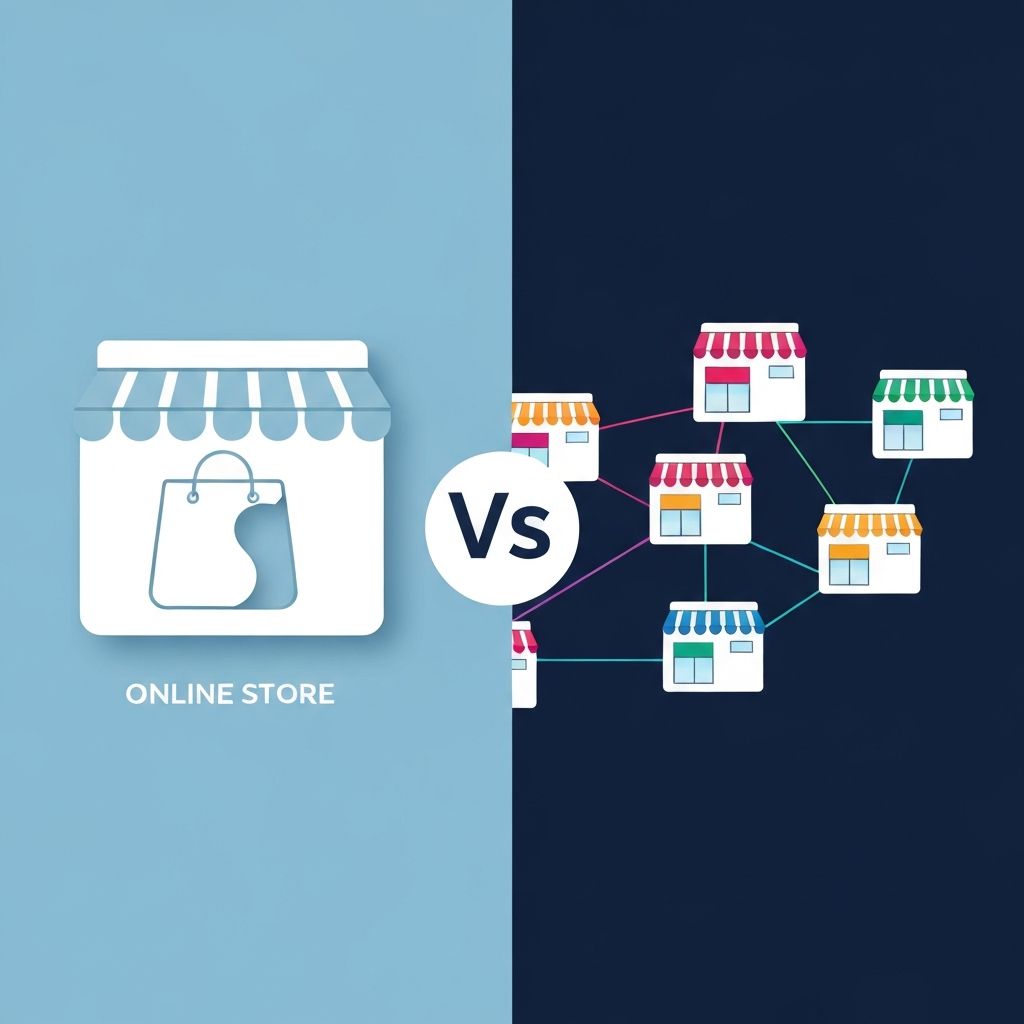
Before you can scale your Shopify Collective store effectively, you need to understand what it was built for. Shopify Collective is designed for product expansion — allowing a Shopify merchant to source products from other Shopify merchants without holding inventory. It is not a purpose-built marketplace platform.
This distinction matters when you're scaling, because the constraints you'll hit are architectural:
- Shopify-only vendors: Every supplier must be a Shopify merchant, limiting your vendor pool
- Manual supplier onboarding: There is no self-service vendor portal; each relationship requires direct negotiation
- No vendor storefronts: Customers cannot browse by vendor, limiting the marketplace experience
- Margin-only revenue model: You can only earn on the spread between wholesale and retail pricing
Understanding these constraints doesn't mean Shopify Collective isn't worth scaling — it means you need a strategy that accounts for them.
Step 1: Audit Your Current Vendor Performance
The first step to scaling your Shopify Collective store is knowing what's already working. Before adding new vendors or expanding categories, analyse your existing supplier relationships with ruthless honesty.
Key metrics to review for each vendor:
- Revenue contribution: Which vendors drive the most gross revenue?
- Margin profile: Which vendor relationships deliver the best margins?
- Fulfilment reliability: Are orders being fulfilled on time and with low return rates?
- Product performance: Which SKUs from each vendor convert best?
- Customer satisfaction: Are vendor-specific products generating returns, complaints, or repeat purchases?
This audit will almost certainly surface a Pareto distribution — roughly 20% of your vendors generating 80% of your value. Double down on those relationships before adding new complexity.
Actionable steps:
- Export your Shopify orders and segment by supplier
- Calculate gross margin per vendor (retail price minus wholesale cost)
- Check fulfilment speed and return rates per vendor
- Identify your top three to five vendors by combined revenue and margin
- Schedule quarterly business reviews with your top vendors
Step 2: Deepen High-Value Vendor Relationships
Scaling a Shopify Collective store isn't just about adding more vendors — it's about extracting more value from the best ones you already have.
Negotiate better wholesale terms
Once you've demonstrated consistent sales volume, you're in a strong position to negotiate improved wholesale pricing. Even a 2–3% improvement in your cost of goods can meaningfully improve your margin at scale.
Approach your top vendors with:
- Trailing 90-day sales data showing your volume
- A proposal for a volume discount tier (e.g., improved pricing above a monthly sales threshold)
- Commitment to feature their products more prominently in exchange for better terms
Co-create exclusive or priority product lines
Some of the most successful Shopify Collective stores differentiate themselves by securing exclusive products or early access to new lines from their best vendors. This creates genuine competitive moats.
Ask your top vendors:
- Can we get early access to new product launches before they're available to other retailers?
- Is there an opportunity to develop exclusive colourways, bundles, or configurations?
- Can we be listed as a preferred retailer on your website?
Improve vendor communication systems
At scale, ad-hoc email communication with suppliers breaks down. Invest early in structured communication:
- A shared Notion or Google Doc for each vendor with agreed terms, product roadmaps, and escalation contacts
- A monthly or quarterly cadence for reviewing performance and planning ahead
- Clear SLAs for stock updates, pricing changes, and new product notifications
Step 3: Expand Your Vendor Network Strategically
With your existing vendor base optimised, you're ready to grow the network. Strategic expansion means adding vendors who fill clear gaps rather than adding volume for its own sake.
Define your category strategy
The most scalable Shopify Collective stores are built around a coherent category strategy. Customers should understand what your store stands for and be able to predict the kinds of products they'll find.
Ask yourself:
- What is the unifying theme or customer identity behind my store?
- Which adjacent product categories would serve my existing customers?
- Which categories have strong search demand but few quality suppliers in my current network?
Use tools like Google Trends, Ahrefs, or Semrush to validate category demand before recruiting vendors in a new space.
Identify and recruit new Shopify vendors
Finding quality Shopify merchants to partner with requires a systematic outreach strategy:
Instagram and TikTok prospecting: Search for brands in your target categories. Look for brands with engaged audiences but limited DTC distribution — these are often open to retail partnerships.
Trade shows and industry events: In-person events remain one of the best ways to meet wholesale-friendly brands. Identify the key trade shows in your niche.
Shopify's Collective discovery features: Shopify Collective has a built-in supplier discovery interface. Use category filters to find Shopify merchants actively looking for retail partnerships.
Direct outreach via LinkedIn: Brand founders and ecommerce directors are often reachable on LinkedIn. A well-crafted pitch highlighting your audience and sales data will get responses.
Vet vendors before onboarding
At scale, a bad vendor can damage your reputation far more than no vendor at all. Build a vetting process:
- Request product samples before listing
- Check Trustpilot and review sites for fulfilment complaints
- Verify their Shopify store has professional presentation and adequate inventory
- Confirm their wholesale pricing delivers acceptable margins for your pricing strategy
Step 4: Optimise Your Store for Marketplace-Scale Traffic
As your product catalogue grows, your Shopify store's user experience needs to evolve. A store with 50 products from five vendors requires different information architecture than a store with 500 products from 50 vendors.
Improve navigation and filtering
When customers can't find what they're looking for, they leave. Invest in:
- Faceted search and filtering: Allow customers to filter by vendor, category, price range, and attributes
- Collections architecture: Create clear, logical collections that map to your category strategy
- Search optimisation: Ensure your Shopify search is surfacing the right products for common queries — consider apps like Searchpie or Boost Commerce for improved search functionality
Optimise product pages for conversion
At scale, even small improvements to product page conversion rates have a disproportionate impact on revenue. For each product category:
- Ensure product photography is consistent in style and quality across vendors
- Write or enhance product descriptions to align with your brand voice — don't just import supplier copy verbatim
- Add social proof: reviews, ratings, and user-generated content where possible
- Include size guides, care instructions, and comparison tables for complex products
Invest in email and retention marketing
Customer acquisition costs continue to rise. The most profitable path to scaling a Shopify Collective store is increasing lifetime value through retention:
- Set up abandoned cart, post-purchase, and win-back email flows via Klaviyo or Mailchimp
- Launch a loyalty programme to reward repeat customers
- Use post-purchase surveys to understand what additional products customers want — this data should inform your vendor recruitment strategy
Step 5: Build Your SEO Foundation
Sustainable scale for a Shopify Collective store comes from organic search traffic, not just paid ads. A well-executed SEO strategy compounds over time, reducing your customer acquisition costs as you grow.
Target long-tail category keywords
Rather than competing for broad keywords like "women's clothing" or "home decor," build authority in specific niches. For example:
- "sustainable activewear for women UK"
- "artisan home fragrance candles"
- "independent jewellery designers UK"
These long-tail terms have lower competition, higher purchase intent, and are achievable for mid-size stores without a massive domain authority.
Create supporting content
A blog that answers the questions your target customers are searching for drives consistent organic traffic and supports your commercial pages. Topics to consider:
- Buying guides for your product categories
- Brand spotlights on your vendors
- Style guides and "how to wear/use" content for your products
- Comparison articles addressing common purchase decisions in your niche
Optimise collection and product pages
Ensure every collection and product page has:
- A unique, keyword-optimised title tag and meta description
- Descriptive, original copy (not just imported supplier content)
- Proper heading hierarchy (H1, H2, H3)
- Structured data markup for products (Shopify handles some of this automatically, but verify)
Step 6: Know When You've Outgrown Shopify Collective
This is the conversation most Shopify Collective guides avoid. The platform's constraints — Shopify-only vendors, manual onboarding, no vendor storefronts, limited revenue models — eventually become the limiting factor for serious marketplace ambitions.
Signs you've outgrown Shopify Collective:
- You're turning away quality vendors because they use WooCommerce, Adobe Commerce, or another platform
- Vendor management is becoming a full-time job because there's no self-service portal
- You want to charge commissions or fees rather than relying solely on margin
- Your customers expect a marketplace experience with vendor transparency, ratings, and storefronts
- You're planning to onboard 50+ vendors where manual management becomes operationally unsustainable
At this stage, the question isn't whether to evolve your platform — it's how to do so with minimal disruption to your existing business.
Transitioning to a Purpose-Built Marketplace Platform
When you've hit the ceiling of what Shopify Collective can support, transitioning to a platform built for marketplace businesses becomes the logical next step.
YouPurr was built specifically for this transition. Rather than a workaround within a single-store platform, YouPurr provides the full infrastructure of a marketplace business:
- Platform-agnostic vendor onboarding: Accept vendors from Shopify, WooCommerce, Adobe Commerce, Wix, or using built-in product management — no longer limited to Shopify merchants
- Self-service vendor portal: Vendors register, submit their details, and await approval without requiring your manual intervention at each step
- Commission-based revenue model: Charge vendors a percentage of sales, fixed fees, or subscription fees — or any combination that fits your market
- Vendor storefronts and ratings: Customers can browse by brand, leave vendor reviews, and build relationships with their favourite sellers on your platform
- Automated operations: Commission calculations, vendor payouts, and product sync happen automatically, allowing you to scale without proportional headcount growth
Importantly, YouPurr integrates directly with Shopify. If your vendors are already on Shopify Collective, they can connect their Shopify store to your YouPurr marketplace with minimal friction. Your existing relationships transfer; the operational infrastructure simply becomes vastly more capable.
Building for Long-Term Scale
Scaling a Shopify Collective store is fundamentally about building a marketplace business, and marketplace businesses are won through network effects. Every vendor you add makes your marketplace more attractive to customers. Every customer you acquire makes your marketplace more attractive to vendors.
The strategies in this guide — auditing vendor performance, deepening key relationships, expanding strategically, optimising the customer experience, and building organic traffic — apply whether you're running on Shopify Collective or a purpose-built marketplace platform.
What changes as you scale is the sophistication of the infrastructure required to support those strategies. Shopify Collective is an excellent starting point. But the merchants who build category-defining marketplaces are those who invest in purpose-built marketplace infrastructure at the right moment in their growth journey.
Ready to take your marketplace to the next level? Explore YouPurr's marketplace platform or get in touch with our team to discuss how we can support your scaling journey.